


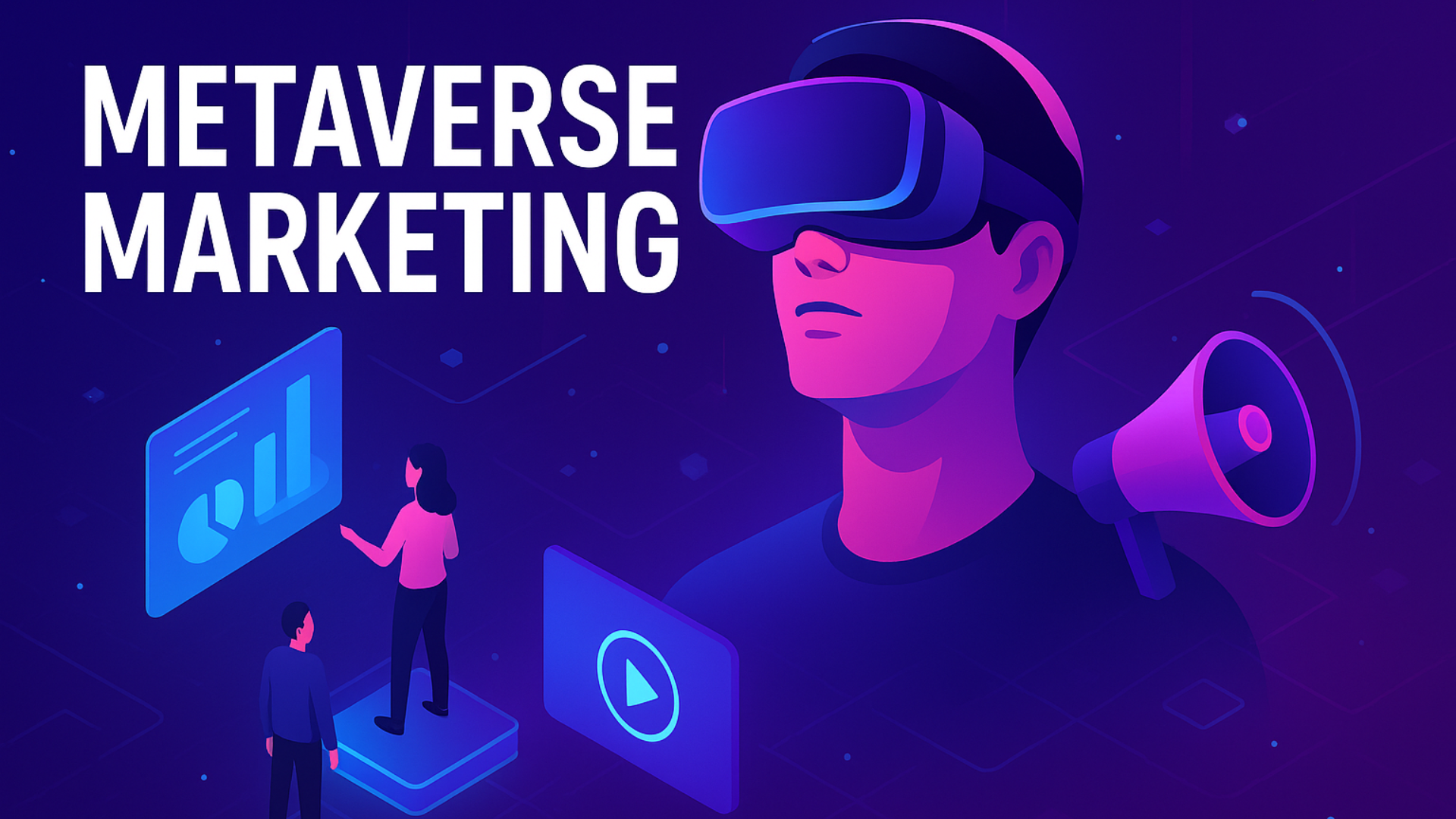
Metaverse Marketing has become one of the most debated topics in the digital marketing ecosystem. While some brands consider it the next evolution of online engagement, others dismiss it as a hyped concept driven by tech giants and speculative investments. As marketing budgets tighten and performance-driven strategies dominate decision-making, the core question remains: is Metaverse Marketing a real opportunity or just temporary hype?
The metaverse promises immersive, interactive, and persistent digital environments where consumers can socialize, work, shop, and play using avatars. For marketers, this opens doors to experiential branding that goes far beyond traditional social media or display advertising. However, adoption barriers, unclear ROI models, and fluctuating consumer interest have created skepticism around its true value.
In this comprehensive guide, we will break down Metaverse Marketing from a strategic, technological, and business perspective. You will understand how it works, which brands are winning, what risks exist, and whether your business should invest or wait.
What Is Metaverse Marketing? A Perspective
Metaverse marketing refers to brand promotion and customer engagement inside immersive virtual environments powered by technologies such as virtual reality (VR), augmented reality (AR), blockchain, artificial intelligence, and 3D modeling. In Metaverse Marketing, these environments have matured into platforms like Decentraland, Roblox, The Sandbox, Horizon Worlds, and Unreal-based enterprise simulations.
Unlike traditional digital marketing, metaverse campaigns allow users to experience a brand rather than just view ads. This could include attending virtual product launches, trying digital fashion for avatars, interacting with branded games, or purchasing NFT-based assets that exist across platforms.
What makes Metaverse Marketing unique is persistence. These virtual worlds remain active even when users log out, enabling long-term brand storytelling rather than one-time campaign exposure.
Why Metaverse Marketing Is Gaining Attention
Several macro-level shifts explain why Metaverse Marketing is no longer just a futuristic idea.
Firstly, Gen Z and Gen Alpha consumers increasingly prefer immersive and interactive digital experiences. Platforms like Roblox already record billions of monthly interactions, proving that virtual worlds are not niche spaces anymore.
Secondly, improvements in hardware accessibility, such as lightweight VR headsets and mobile-based AR, have reduced entry barriers for users. This enables broader participation without expensive setups.
Thirdly, brands are under pressure to differentiate. Traditional social ads are oversaturated, CPCs are rising, and user attention is fragmented. Metaverse Marketing offers novelty, exclusivity, and deeper engagement — three elements modern branding struggles to achieve elsewhere.
Hype vs Reality: Is Metaverse Marketing Overpromised?
Despite strong interest, critics argue that Metaverse Marketing is still driven by hype rather than data-backed results. This skepticism is not entirely wrong.
Many early brand activations failed because they prioritized visibility over user experience. Empty virtual stores, low traffic events, and unclear value propositions damaged trust in metaverse ROI.
Additionally, user adoption remains uneven across regions and demographics. While gamers and tech-savvy audiences engage actively, mainstream consumers are still cautious.
However, labeling Metaverse Marketing as “just hype” ignores its evolution. Brands that focus on community-building, utility, and storytelling rather than quick PR stunts are seeing long-term benefits.
Key Components of Successful Metaverse Marketing
1. Immersive Brand Experiences
In Metaverse Marketing, static ads fail. Brands must create interactive spaces where users can explore, play, and co-create. Experiences that mirror real-world value tend to perform best.
2. Digital Ownership and NFTs
NFTs are no longer speculative assets alone. Brands use them as loyalty rewards, membership passes, or digital merchandise compatible across platforms.
3. Avatar-Based Engagement
Consumers express identity through avatars. Offering customization, digital fashion, and branded wearables creates emotional attachment and social visibility.
4. Community-First Strategy
Metaverse Marketing rewards brands that nurture communities rather than broadcast messages. Engagement happens through events, challenges, and shared experiences.
Metaverse Platforms Brands Are Using
| Platform | Primary Audience | Marketing Use Case |
|---|---|---|
| Roblox | Gen Z, Gamers | Branded games, virtual products |
| Decentraland | Crypto-native users | Virtual real estate, NFT launches |
| The Sandbox | Creators, Brands | Co-branded virtual worlds |
| Horizon Worlds | Social VR users | Immersive social experiences |
| Fortnite Creative | Youth audience | Interactive brand collaborations |
This table shows that Metaverse Marketing is not platform-dependent but audience-driven.
Industries Benefiting Most from Metaverse Marketing
Metaverse Marketing does not impact all industries equally. Sectors seeing maximum traction include:
-
Fashion & Luxury: Digital clothing, runway shows, and NFT wearables
-
Gaming & Entertainment: Interactive storytelling and fan engagement
-
Real Estate: Virtual property tours and metaverse land
-
Education & Training: Simulated learning environments
-
Retail & E-commerce: Try-before-you-buy virtual experiences
Each of these industries benefits because visualization, interaction, and immersion directly influence purchase behavior.
Advantages of Metaverse Marketing
Metaverse Marketing offers several strategic advantages when executed correctly. It increases brand recall because immersive experiences activate multiple senses. It enhances engagement metrics, often outperforming traditional ads in session duration and interaction depth.
Another advantage is data richness. Brands can track movement patterns, engagement hotspots, and interaction behavior — insights rarely available in traditional marketing channels.
Finally, it positions brands as innovators. Early adopters gain reputational value that translates into higher trust and authority.
Challenges and Risks in Metaverse Marketing
Despite its potential, Metaverse Marketing comes with real challenges.
Technical development costs remain high. Building high-quality virtual environments requires skilled designers, developers, and ongoing maintenance.
There are also regulatory uncertainties regarding data privacy, digital asset ownership, and user safety. Brands must navigate these carefully to avoid reputational damage.
Most importantly, ROI measurement lacks standardized benchmarks. Success metrics differ from clicks and conversions, forcing marketers to rethink performance evaluation.
How Brands Measure ROI in Metaverse Marketing
In Metaverse Marketing, ROI is measured through engagement depth rather than immediate sales.
Common KPIs include:
-
Time spent in experience
-
Repeat visits
-
Social sharing and mentions
-
NFT utility usage
-
Community growth metrics
Forward-thinking brands connect metaverse data with CRM systems to track long-term customer value rather than short-term conversions.
Future Trends Shaping Metaverse Marketing
Metaverse Marketing is evolving rapidly. AI-powered NPCs are enabling personalized brand interactions. Interoperability between platforms is improving, allowing digital assets to move across ecosystems.
Mixed reality experiences, blending physical and virtual worlds, are gaining popularity. Brands integrating metaverse touchpoints with real-world campaigns see higher impact.
Should Your Brand Invest in Metaverse Marketing?
The answer depends on audience readiness, brand maturity, and long-term vision.
If your audience values immersive experiences, community participation, or digital identity, Metaverse Marketing offers a strong opportunity. If your brand relies heavily on short-term conversions without storytelling depth, the metaverse may not deliver immediate results.
The smartest approach is experimentation — limited pilots, data analysis, and gradual scaling.
Final Verdict: Metaverse Marketing – Hype or Opportunity?
Metaverse Marketing is no longer blind hype, but it is not a guaranteed win either. It is a strategic channel that rewards patience, creativity, and user-centric thinking.
Brands that treat the metaverse as a long-term ecosystem rather than a short-term campaign will gain significant competitive advantage. For others, watching, learning, and preparing may be the smarter move.
The opportunity is real — but only for brands willing to evolve how marketing truly works.

wonderful blog