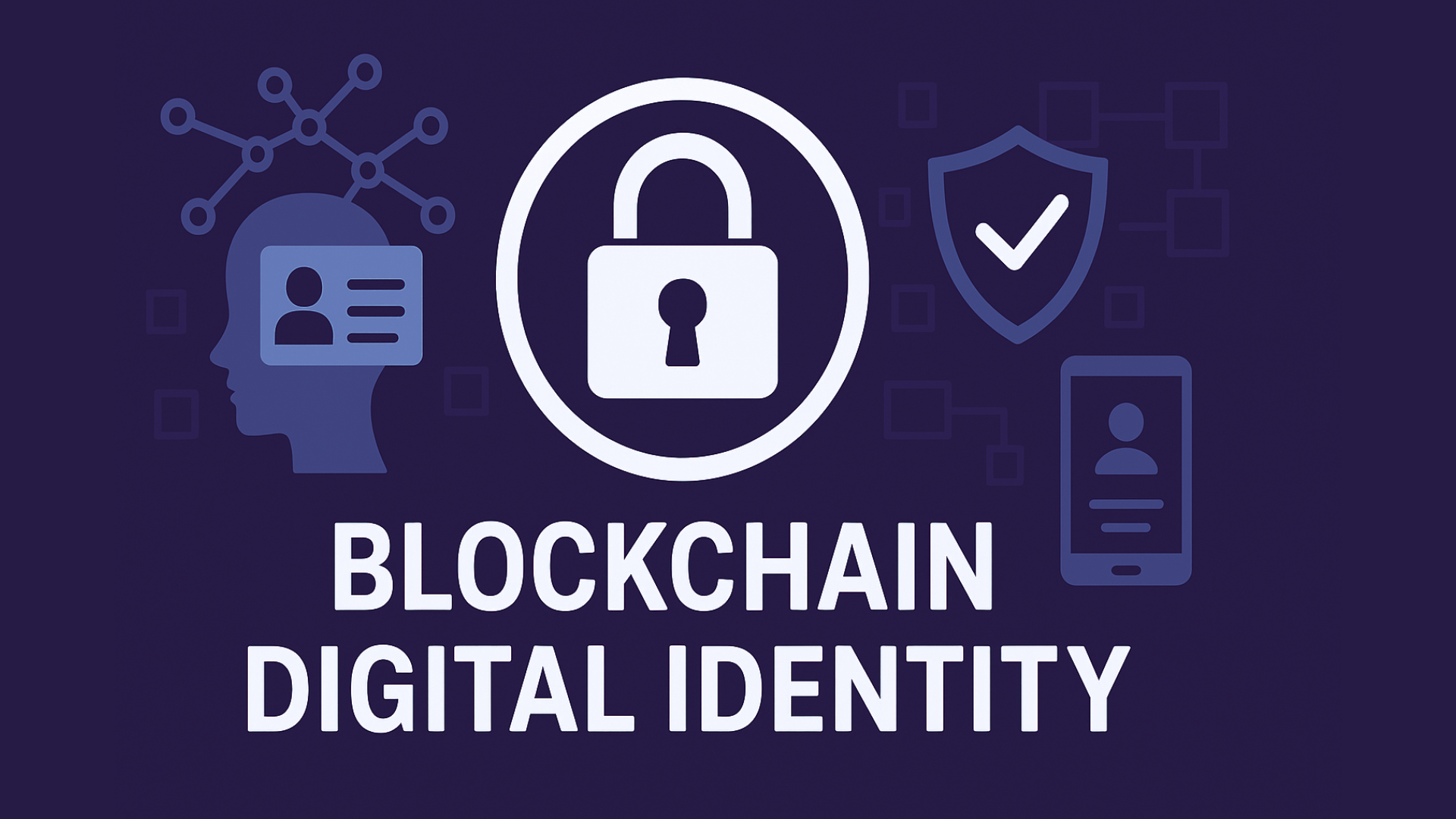
In today’s rapidly evolving digital world, the concept of Blockchain Digital Identity has emerged as a powerful solution for addressing the growing vulnerabilities of online authentication, data integrity, and identity fraud. As cyber-attacks become more advanced and centralized data systems continue to be prime targets for hackers, organizations worldwide are exploring decentralized technologies to build more resilient identity frameworks. Blockchain, with its transparent, tamper-proof, and distributed architecture, presents a revolutionary shift in how individuals, businesses, and governments manage and secure digital identities.
Digital identity has become the backbone of modern online interactions—whether logging into social media, accessing financial accounts, proving citizenship, or completing cross-border transactions. Yet, most current identity systems rely on centralized servers, which expose users to theft, privacy breaches, unauthorized data sharing, and large-scale cyber incidents. This is exactly where blockchain’s decentralized nature provides a transformational advantage. Instead of storing data in a single, vulnerable location, blockchain distributes identity information across multiple secure nodes—making unauthorized access significantly harder.
In this in-depth 4000-word guide, we will explore how Blockchain Digital Identity works, its role in cybersecurity, its benefits, challenges, use cases, implementation models, and future predictions that will redefine how digital identity will be managed in the coming decade.
Table of Contents
-
Introduction to Blockchain Digital Identity
-
Understanding Digital Identity in the Modern Era
-
Limitations of Traditional Identity Systems
-
What is Blockchain and Why is It Suitable for Identity?
-
Key Components of Blockchain Digital Identity
-
How Blockchain Enhances Cybersecurity
-
Self-Sovereign Identity (SSI) and Decentralized Identifiers (DIDs)
-
Blockchain Identity Management Process (Step-by-Step)
-
Benefits of Blockchain in Digital Identity
-
Use Cases Across Industries
-
Challenges & Limitations of Blockchain-Based Identity
-
Future Trends in Blockchain Identity & Cybersecurity
-
Conclusion
1. Introduction to Blockchain Digital Identity
Modern societies rely heavily on digital infrastructures for everything—shopping, banking, communication, healthcare, education, and government services. As these activities generate massive amounts of user data, managing digital identities securely has become both essential and complex. Unfortunately, centralized identity systems are prone to breaches, misuse, identity theft, and unauthorized third-party access.
The emergence of Blockchain Digital Identity brings a paradigm shift: instead of storing personal data in centralized databases, identity credentials can now be securely stored, verified, and managed using decentralized blockchain networks. This enhances privacy, increases user control, protects against cyber-attacks, and reduces reliance on intermediaries.
This blog explores this technological evolution in detail and analyzes why blockchain is considered a cornerstone of next-gen cybersecurity solutions.
2. Understanding Digital Identity in the Modern Era
Digital identity refers to the set of electronically stored attributes and credentials that define an individual or organization. This includes:
-
Personal information
-
Email and phone numbers
-
Biometric data
-
Social media profiles
-
Login credentials
-
Financial identifiers
-
Government-issued documentation
Today, digital identity is more critical than physical identity, as it governs nearly every aspect of an individual’s digital footprint. However, managing this identity securely is a major challenge because data breaches have become more frequent and sophisticated.
3. Limitations of Traditional Identity Systems
Traditional centralized identity systems create single points of failure. When one central server is breached, millions of user identities may be compromised. Below are the major weaknesses of centralized identity databases:
3.1 Major Limitations
| Limitation | Description |
|---|---|
| Centralized Storage | Data stored in one place makes it attractive to hackers. |
| High Breach Risk | Central systems are more vulnerable to phishing, malware, ransomware. |
| User Has Little Control | Companies control identity data, not the user. |
| Complex Verification | KYC processes are time-consuming and require multiple intermediaries. |
| Data Misuse | Organizations may sell or misuse personal data without user consent. |
These issues have encouraged businesses and governments to explore decentralized identity systems powered by blockchain.
4. What is Blockchain and Why is It Suitable for Identity?
Blockchain is a distributed ledger technology that records information across multiple nodes instead of storing it in one central location. Every entry is encrypted, timestamped, and immutable.
4.1 Why Blockchain is Perfect for Identity Management
Blockchain supports a secure environment for identity systems due to:
-
Decentralization – No central authority controls user identity.
-
Immutability – Identity records cannot be altered maliciously.
-
Transparency – Every action can be verified without exposing sensitive data.
-
Cryptographic Security – Strong encryption protects all identity attributes.
-
User Ownership – Individuals control access to their personal data.
These features make blockchain ideal for building a secure and future-proof identity ecosystem.
5. Key Components of Blockchain Digital Identity
A blockchain identity system includes several core components:
5.1 Public and Private Keys
Users have two cryptographic keys:
-
Public Key – Shared with others for verification
-
Private Key – Kept secret for authentication
These keys form the basis for secure identity interactions.
5.2 Digital Wallet for Identity
Just like cryptocurrency wallets, identity wallets store:
-
Credentials
-
Certificates
-
Digital IDs
-
Access permissions
Wallets give users full control over who can access their data.
5.3 Decentralized Identifiers (DIDs)
A DID is a unique identifier created and controlled by the user instead of a central authority. It replaces usernames, emails, or ID numbers.
5.4 Verifiable Credentials (VCs)
These are digitally signed documents issued by trusted authorities. Examples include:
-
Digital passports
-
Driving licenses
-
Academic certificates
-
Employment records
VCs can be verified instantly without exposing sensitive data.
6. How Blockchain Enhances Cybersecurity
6.1 Decentralized Infrastructure
By eliminating centralized databases, blockchain reduces vulnerability to cyber-attacks.
6.2 Zero-Trust Architecture
Blockchain supports zero-trust models where:
-
Every interaction must be verified
-
No user or device is automatically trusted
6.3 Cryptographic Verification
Everything stored on the blockchain is encrypted using advanced cryptography, making unauthorized access nearly impossible.
6.4 Prevents Identity Fraud & Deepfakes
Since identity attributes are verifiable and immutable, fraudulent identities, manipulated documents, and fake credentials can be easily detected.
6.5 Eliminates Single Points of Failure
Distributed nodes ensure that even if one node is compromised, attackers cannot corrupt the entire system.
7. Self-Sovereign Identity (SSI) and DIDs
Self-Sovereign Identity (SSI) is the core principle behind Blockchain Digital Identity. It empowers users to fully control their identity without relying on centralized authorities.
Key Features of SSI
-
Users own their identity
-
Data sharing is consent-based
-
Third-party access is limited
-
No dependence on intermediaries
-
High privacy and security
SSI combined with DIDs allows individuals to authenticate themselves across platforms without repeatedly sharing sensitive data.
8. Blockchain Identity Management Process (Step-by-Step)
Here is a simplified process of how blockchain-based identity is created and verified:
Step 1: User Creates DID
The user’s identity wallet generates a unique decentralized identifier.
Step 2: Issuer Verifies Identity
A trusted authority (government, bank, university) verifies the user’s identity.
Step 3: Issuer Creates Verifiable Credential
A digitally signed credential is generated and stored in the user’s identity wallet.
Step 4: User Shares Credential When Needed
Users can share selective data (not entire documents) with verifiers.
Step 5: Verifier Confirms Validity on Blockchain
The verifier checks:
-
Cryptographic signatures
-
Issuer’s validity
-
Credential authenticity
This creates a fast, secure, and privacy-focused identity system.
9. Benefits of Blockchain in Digital Identity
9.1 Enhanced Privacy
Users no longer need to share excessive personal information.
9.2 Fraud Prevention
Tamper-proof identity records prevent fake identities and impersonation.
9.3 Faster Verification
Instant verification eliminates long KYC and background checks.
9.4 Reduced Costs
Organizations save money by minimizing intermediaries.
9.5 Global Interoperability
Blockchain identities can be used across borders.
9.6 Data Ownership and Control
Users decide who can access their identity data.
10. Use Cases Across Industries
10.1 Government & Public Services
-
Digital passports
-
National ID systems
-
Voting systems
-
Citizen authentication
10.2 Banking & Finance
-
KYC automation
-
Fraud prevention
-
Secure transactions
-
Digital onboarding
10.3 Healthcare
-
Patient identity
-
Cross-hospital record sharing
-
Insurance verification
-
Medical data privacy
10.4 Education
-
Academic certificates
-
Skill verification
-
Admission processes
10.5 E-commerce & Online Platforms
-
Login authentication
-
User identity validation
-
Secure payments
10.6 Supply Chain and Corporate Security
-
Employee identity
-
Vendor verification
-
Access control
Blockchain Digital Identity has the potential to transform nearly every sector.
11. Challenges & Limitations
11.1 Scalability Issues
Large-scale identity systems need high-performing blockchains.
11.2 Regulatory Compliance
Different countries have different laws and standards.
11.3 User Responsibility
If users lose their private keys, recovery becomes difficult.
11.4 Interoperability Challenges
Different blockchains may not communicate seamlessly.
11.5 Initial Adoption Costs
Organizations require technical integration and training.
12. Future Trends in Blockchain Identity & Cybersecurity
12.1 AI + Blockchain for Identity Validation
Artificial intelligence will enhance real-time identity verification.
12.2 Biometrics on Blockchain
Secure biometric identity storage (iris, fingerprint).
12.3 Cross-Border Digital Identity Networks
Countries will collaborate to build unified identity systems.
12.4 Enterprise-Level Decentralized Systems
Businesses will adopt blockchain identity for employees and customers.
12.5 Metaverse & Web3 Identity
Blockchain will be the foundation of Web3 digital identities.
12.6 Decentralized Authentication Models
Passwords will be replaced with blockchain-based login systems.
13. Conclusion
The adoption of Blockchain Digital Identity marks a transformative shift in how individuals, institutions, and governments approach cybersecurity and identity management. As cyber-attacks grow more advanced, decentralized identity systems powered by blockchain provide enhanced security, privacy, transparency, and user control—something traditional identity frameworks have been unable to achieve.
Blockchain has proven its potential to eliminate data breaches, enable seamless verification, enhance privacy, and empower individuals with ownership of their digital identities. While challenges such as regulation, scalability, and user education still exist, the future is undoubtedly promising. With increasing digitalization, blockchain will play a central role in shaping a safer, more secure, and user-centric digital world.
Read More: Metaverse Marketing: Hype or Opportunity for Brands?